I’ll never forget that sinking feeling last spring when I swept away leftover winter debris on my patio, only to uncover a jagged crack running straight down the middle. While everyone obsesses over raking leaves and cleaning gutters, we often ignore our hardscape. Paver walkways, stone patios and driveways also need prep before the snow starts falling. Tackle these often-overlooked maintenance chores now so you can avoid an expensive contractor bill next year.
Gather Your Tool Kit
Before diving into your weekend micro-tasks, you need the right tools and supplies. Even a small budget and some basic skills are enough when you follow a fall concrete sealing DIY guide and other hardscape upkeep tutorials.
Some tools you’ll need include:
- Stiff wire brush: Good for scrubbing out dirt and debris from tight crevices before patching cracks.
- Standard caulk gun and flexible sealant: These are your best defense against freeze-thaw expansion.
- Paver sand: An inexpensive bag of joint or masonry sand to level out walkways.
- Concrete-safe ice melt: Skip the rock salt and grab a bag of calcium magnesium acetate instead.
A quick trip to the hardware store for these supplies won’t break the bank. DIY still costs a fraction of the hundreds a professional would charge to replace a ruined stone pathway or driveway.
Level Sinking Pavers
Poured concrete is only one of the surfaces that suffer from the cold. If you have a brick walkway, stone driveway or paver patio, neglect in autumn can lead to serious winter damage.
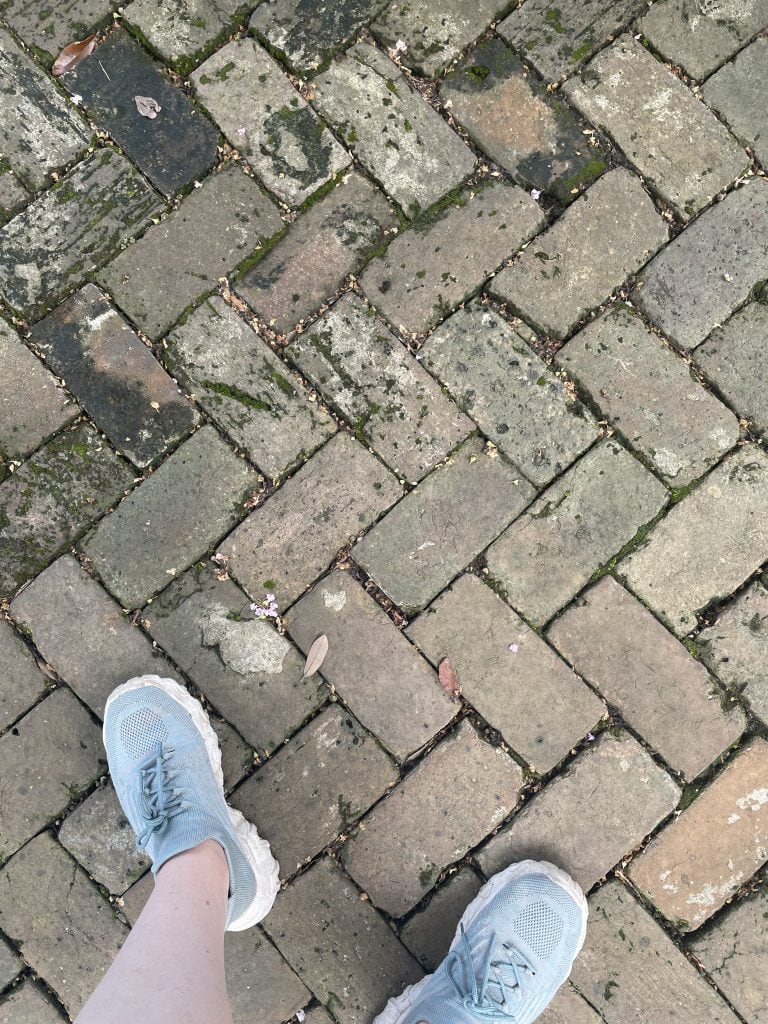
If a paver has sunken over the summer, it creates a low spot where autumn rain pools. When temperatures drop, that puddle turns to ice, causing “frost heave,” which pushes the surrounding stone out of alignment. Leaving a sunken paver can mean dealing with a dangerous, icy tripping hazard every time you walk to your car in January, as well as a warped walkway by April.
To fix this problem, use a flathead screwdriver or putty knife to pry up the sunken stone. Toss a handful of your cheap paver sand underneath to level the base, and drop the stone back in perfectly flush against the rest of the walkway. This task often takes five minutes or less.
Defend Your Hardscape With a Fresh Sealer
Learning how to seal a concrete patio before winter is essential for DIYers who want their outdoor spaces to look brand-new every spring. Test your driveway and see if you need sealer this year. Pour a half-cup of water onto the surface, and if it beads up like rain on a freshly waxed car, you’re good. If the water turns the surface dark and soaks in, it’s time to seal.
Once done, the result will last a few years. With a high-quality product on your hardscape, you generally only need to do this every three to five years to keep everything protected.
Also, remember that different concrete finishes require different pre-winter protection. For example, if you have a stamped or stained patio, applying the proper sealer helps protect it against moisture and preserves that custom color.
You don’t need fancy industrial sprayers. A simple paint roller with a thick nap designed for textured surfaces works perfectly. Roll it onto the surface in small, manageable sections, just like painting a living room wall.
Inspect and Fill Hidden Hairline Cracks
When it comes to concrete patio maintenance before winter, playing detective with all your poured surfaces is a must. Concrete and stone are sponges. When water drips into a hairline crack in your driveway, it sits and soaks in there. When the temperature plummets at night, that water turns to ice and expands.
That tiny, innocent-looking crack you ignored in October? By March, the expanding ice will likely have forced it open, leaving you with a jagged, weed-filled crevice. Of course, if you use driveway salt, it will help manage the weeds, but it will also widen the crack more.
If you find a crack on your hardscape, scrub it with your brush. Remove dirt, moss, loose pebbles and other debris. Otherwise, the sealant won’t stick to the walls of the crack. Then, snip the tip of your sealant tube, load it into your caulking gun and squeeze a sufficient amount into the crack. Use a putty knife to smooth it out so it sits flush with the surface.
Switch Out Harsh Chemical Ice Melts
An effective strategy for outdoor concrete freeze-thaw damage prevention requires action once snow falls. It all comes down to what product you use on your driveway and walkways to remove ice.
Most of us reach for rock salt to melt ice, but it’s incredibly destructive on hardscape. It lowers the freezing point of water, creating an artificial slush that seeps deep into porous stone and concrete. When the sun goes down, and temperatures drop again, that salty chemical mixture freezes inside the concrete, causing the surface to crack, peel and flake off.
Beyond destroying your driveway, traditional rock salt can run off into your garden beds, poisoning the soil and killing your grass borders. If you have pets, it can burn their paws.
Ditch the salt. To prevent winter damage to concrete driveways, switch to calcium magnesium acetate deicer. It’s gentler on hardscapes, pets and the environment. You can also buy a bag of playground sand for gritty traction.
Look Forward to a Damage-Free Spring
Spending a few dollars on a wire brush and sealer today means you eliminate crumbling concrete, panic and massive repair bills when the snow melts. So take charge of your home maintenance. Protect your outdoor space before winter, so it’s protected and perfect for you when spring returns.

Hi I’m Adrienne Carrie Hubbard. I believe a rich life comes not from the things you have, but the things you do; the experiences you create and the people you meet along the way. Thanks for hanging out!
Leave a Reply